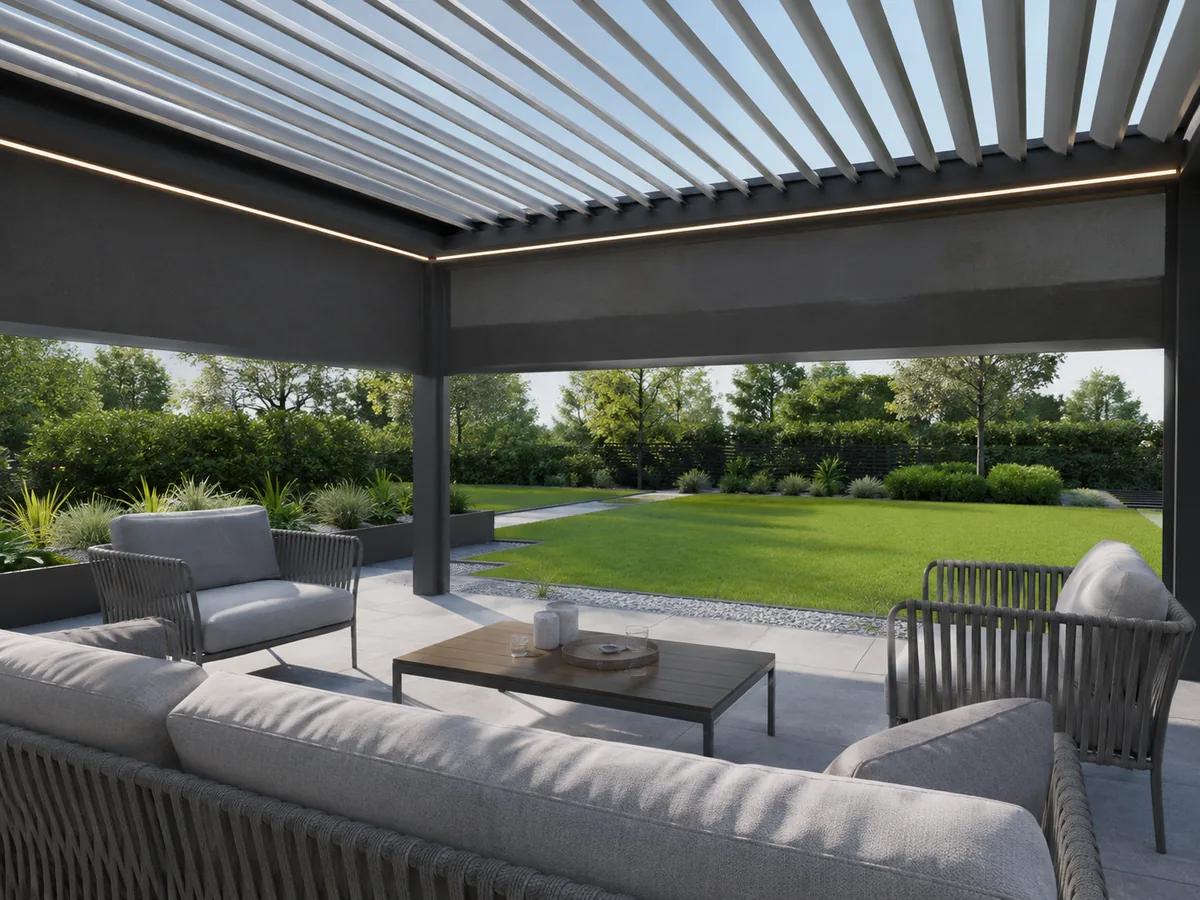
Choose ZIP screens when side shade and adjustable privacy are the priority; choose sliding or folding glass when a transparent enclosure is the priority. Screen privacy depends on fabric and lighting, while clear glass does not provide privacy by itself. Neither option automatically creates a weather-sealed or insulated room. Confirm the selected system, site exposure, openings, tracks and drainage before ordering.
ZIP screen and sliding glass comparison
| Factor | ZIP screen | Sliding or folding glass |
|---|---|---|
| Privacy | Depends on fabric and lighting on both sides; check nighttime use | Clear glass preserves visibility and does not provide privacy by itself |
| View | View depends on the chosen fabric | Transparent view, interrupted by frames and overlapping panels |
| Ventilation | Allows airflow depending on fabric | More enclosed when shut |
| Operation | Confirm manual or motorized operation for the proposed screen | Confirm sliding or folding movement and panel storage space |
| Planning need | Wiring, side tracks, bottom bar and wind exposure | Track level, panel stack, drainage and cleaning access |
When ZIP screens fit better
ZIP screens suit patios and restaurant terraces where low-angle sun or overlooking affects the seating area. Review the fabric from the seated position and with the intended evening lighting: a screen that provides daytime privacy may look different after dark. Wind suitability and operating limits must be confirmed for the selected system and site.
The quotation should define every opening separately: width, drop height, fabric preference, motor side, control grouping and any obstruction near posts or beams.
Review motorized ZIP screens for pergolas for the opening measurements, mounting space and control details to prepare.
When sliding or folding glass fits better
Consider glass when retaining the view and enclosing the sides matter more than visual privacy. Sliding and folding arrangements use space differently: compare the clear passage, overlapping or parked panels, threshold, floor levels and cleaning access. Confirm the proposed system's weather performance; glass around a pergola does not automatically create an insulated indoor room.
Compare sliding and folding glass enclosures against your access route and available track space.
Can both options be combined?
A mixed layout may be considered, such as glass facing a garden view and screens on a sun-exposed side. If both are proposed for one opening, reserve separate space for tracks, housings, handles, wiring and drainage. Confirm compatibility and operation on the project drawing before ordering either system.
How do I specify screens or glass for each side?
Number the openings on a plan and record each side separately. One side may need afternoon shade, another an uninterrupted view, and another daily access. Using the same enclosure everywhere is not automatically the best layout.
- Label the opening: for example, A faces the garden and B faces the neighbouring property. Include a photo taken from the seating area.
- Record width and height: identify what you measured between and whether dimensions are approximate or taken from an approved drawing.
- State the priority: side shade, evening privacy, view or frequent passage. Note the hours of use.
- Show moving-part space: mark doors, furniture, screen housings, glass tracks and where panels would park.
- Assign the interface check: identify who will confirm fixing surfaces, floor levels, drainage and any electrical provision before order approval.
For evening privacy, see how lighting affects ZIP screen privacy. For a more enclosed space, read the glass condensation and ventilation guide. These separate questions should be resolved before treating an enclosure as a year-round room.
Frequently asked questions
Are ZIP screens better than glass for privacy?
Fabric screens can reduce visibility compared with clear glass, but the effect depends on the fabric and light on both sides. Review daytime and nighttime conditions rather than assuming one-way privacy.
Is glass better for keeping a view?
Clear glass generally preserves a more transparent view than screen fabric. Check frame positions, overlapping panels and where the open panels will be parked.
Can enclosure accessories be added later?
Sometimes, after checking the existing frame, fixing surfaces, opening dimensions and floor levels. Reserve tracks, wiring and drainage space early if future screens or glass are planned.
What should I send for enclosure quotation?
Send a numbered opening schedule with clear widths and heights, frame photos or drawings, location, screen or glass quantities and your privacy and access priorities. Identify mounting space, power needs, floor levels and drainage constraints.
Can ZIP screens and glass share the same opening?
They may be considered together, but compatibility must be confirmed. Show separate tracks, screen housing, handles, power routes and drainage on the layout, and check that neither system obstructs the other.
This guide helps buyers prepare a clearer quotation brief. Final model choice, structural suitability, foundations, local compliance, electrical work, drainage and installation details must be confirmed for the specific project.
Technical review: JY Home Shade factory product team | Last reviewed: 4 September 2026
Send your pergola project details
Share the size, quantity, country, installation type and accessory requirements. The factory team can review the configuration before quotation.
Request an enclosure quotation