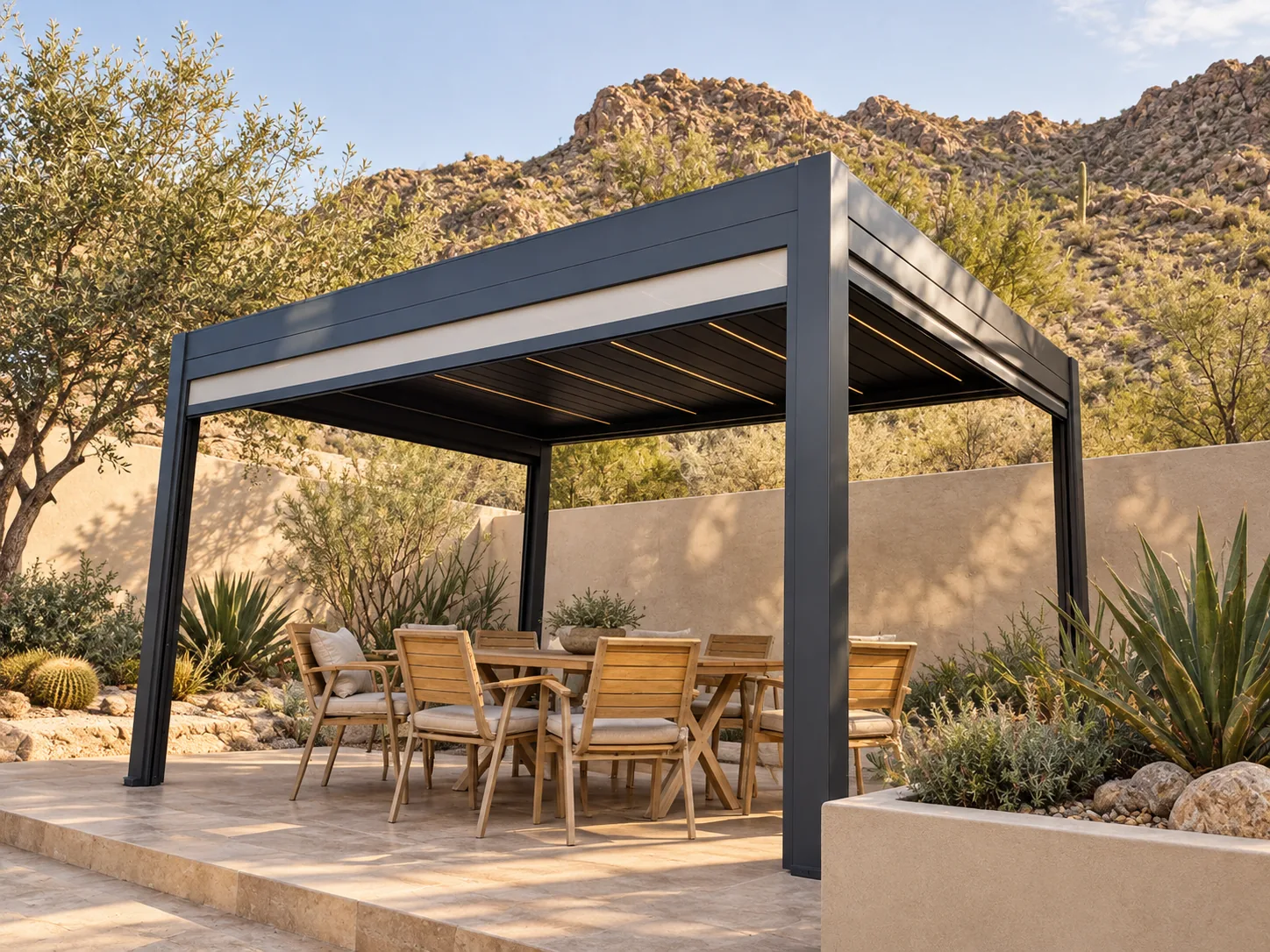
For hot, desert or coastal sites, provide temperature range, UV and salt exposure, wind conditions, rainfall pattern, sand or dust, cleaning access and expected operating hours. Select the roof and accessories for shade and airflow, then confirm finish system, hardware, drainage, electrical protection and maintenance with the supplier and qualified local project team.
Describe the climate instead of naming only the country
Conditions can vary sharply within one market. A sheltered inland villa, an exposed seafront restaurant and a high-rise rooftop in the same city do not have the same finish, wind or maintenance demands. State distance from the coast, elevation, surrounding shelter, prevailing wind, seasonal dust, rainfall intensity and whether the site is continuously occupied.
Hot-climate design priorities
Control direct sun
Use louver orientation and closure strategy to manage the most important sun angles.
Preserve ventilation
Avoid enclosing every side without considering heat buildup and airflow.
Plan occupied zones
Coordinate fans, screens, lighting and seating rather than treating accessories separately.
Review colour and heat
Discuss finish colour, touchable surfaces and cleaning expectations for intense sun.
Coastal and marine-exposure questions
| Area | Question to confirm |
|---|---|
| Finish | Which powder-coat preparation and finish system is proposed for the exposure? |
| Hardware | Which fasteners, brackets and moving components are supplied, and what maintenance is required? |
| Drainage | Can gutters, outlets and post routes be accessed and flushed? |
| Electrical | How are motors, controls, joints and isolators protected and serviced? |
| Cleaning | What washing frequency and methods are recommended for salt, dust or sand? |
| Damage | How should scratches or finish damage be documented and repaired? |
Hot climates still need drainage planning
Short intense rain events can exceed the assumptions of an incomplete concept. Mark every outlet, post drainage route and final discharge. Check finished floor slopes and avoid sending roof water to entrances or enclosed tracks. Keep gutters and outlets accessible for cleaning where dust, leaves or sand can accumulate.
Screens and glass need an operating strategy
ZIP screens can reduce low-angle sun and improve privacy, while glass can extend weather protection. Both change airflow and user behaviour. Define which sides operate at different times of day, where doors or escape routes remain clear, and how panels or screens are protected during unsuitable wind conditions.
Maintenance information to request
- Cleaning method and frequency for the stated exposure.
- Inspection points for finish, fasteners, seals, gutters and moving parts.
- Access requirements for motors, controls and drainage.
- Operating guidance for high wind, storms or extended closure.
- Process for identifying replacement components by order and module.
- Warranty conditions relevant to installation and maintenance records.
No material or finish should be described as maintenance-free or universally corrosion-proof. Final specification, structural suitability, electrical protection and maintenance must reflect the actual site and local requirements.
Technical review: JY Home Shade factory product team · Last reviewed: 28 August 2026
Next planning step
Aluminum Pergola Connections: Understanding Dissimilar-Metal Corrosion: Learn why moisture, metal combinations and connection detailing matter when specifying fasteners and accessories for an aluminum pergola.
Describe the exposure with your project photos
Include distance from the coast, rooftop or ground-level location, sun direction, wind exposure and required side enclosures.