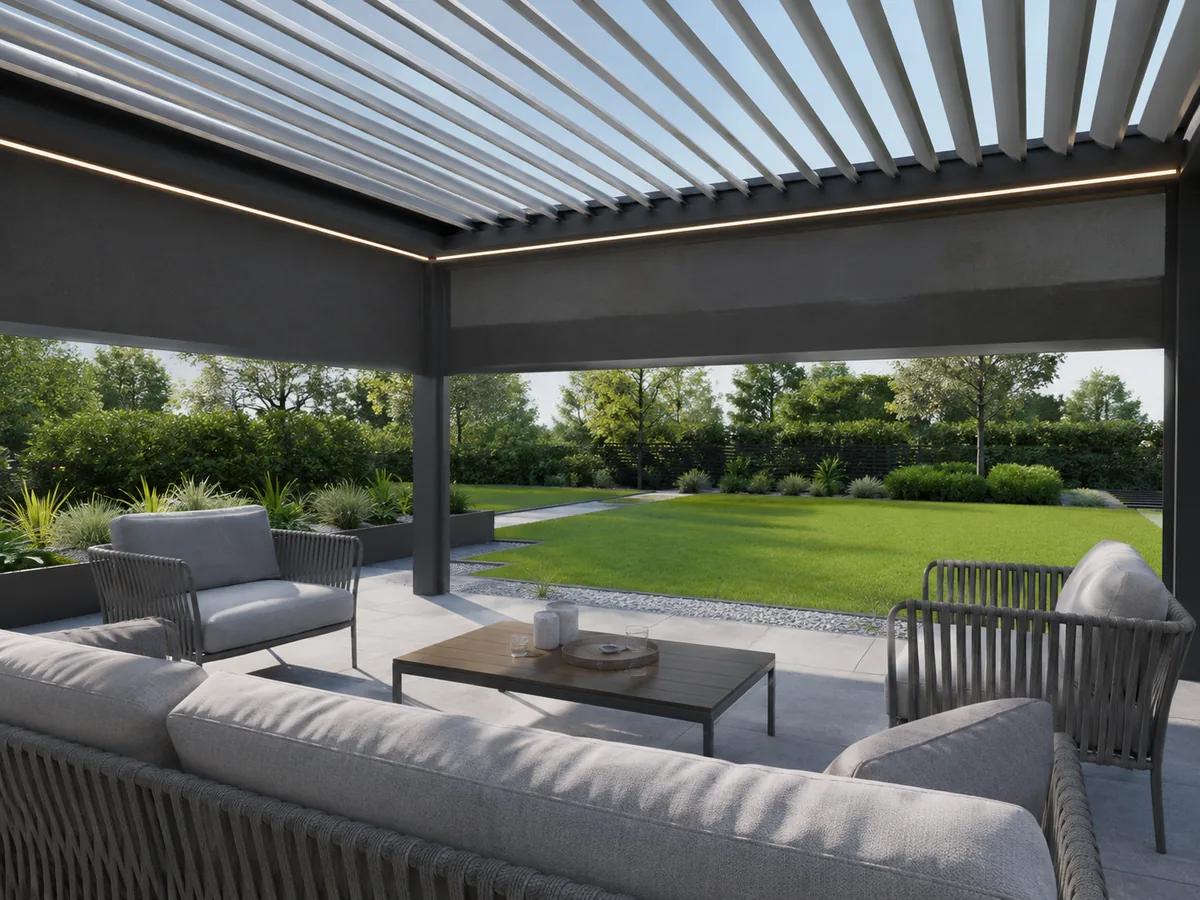
A closed louvered roof can guide rainwater into gutters and planned outlets, but that does not guarantee a completely dry patio. Check the selected roof system, wall junctions, open sides and where collected water discharges. Rain-protection claims should be tied to the specified configuration and installation conditions, rather than a general waterproof label.
What does waterproof mean for a pergola?
Buyers often use the word waterproof to mean different things. Some mean protection from normal rain while sitting outside. Others expect a building-grade roof with sealed edges, insulated walls and no wind-driven water. A louvered pergola is an outdoor architectural product, so the correct question is how the roof manages rain under the specific project conditions.
How rain is managed
When the louvers close, water is guided from the blade surface toward the frame and gutter path. From there, drainage can be routed through selected posts or outlets depending on design. For the result to work well, the module layout, blade direction, post drainage, outlet position and site discharge should be coordinated before production.
For a rotating roof, review the motorized louvered pergola systems with your proposed drainage route and exposed sides in mind.
Common rain-protection limits
| Situation | Why it matters |
|---|---|
| Wind-driven rain | Rain can enter through open sides even if the roof is closed. |
| Wall-mounted connection | The building interface needs flashing or sealing review. |
| Dirty gutters | Leaves, dust or sand can reduce drainage performance. |
| Uneven paving | Water discharge may flow toward doors or furniture. |
| Added accessories | Screens and glass should not block drainage routes. |
Why can water reach the patio with the roof closed?
Start by recording where the water appears. Different entry points call for different checks; the word leak alone does not identify the cause.
- From the side: note wind direction and the exposed opening. A closed roof does not close the sides.
- At a roof or wall junction: photograph the location and ask the installer to review the connection and drainage details.
- Across the paving: trace where roof outlets discharge and whether surface water runs back toward doors or seating.
Send photos taken from a safe position, the weather conditions and the installed layout for review. Confirm the discharge route using the pergola drainage planning guide. Do not change structural connections or electrical components to test a suspected cause.
Buyer checklist before asking for rain protection
- Share photos of the site, paving slope and nearby drains.
- Confirm whether the pergola is freestanding or wall-mounted.
- Mark where water can safely discharge.
- Tell the factory if ZIP screens or glass enclosures are required.
- Ask for drainage routing to be shown in the project drawing.
Frequently asked questions
Can I sit under a louvered pergola during rain?
A closed roof may improve shelter, but comfort depends on the selected system, rainfall, wind, open sides and drainage. Follow the applicable operating instructions and do not assume the whole seating area will remain dry.
Does a louvered pergola replace a house roof?
No. It is an outdoor shade and rain-management system. Do not assume it meets the requirements of a sealed building roof or indoor extension; that requires a separate project assessment.
Do ZIP screens make it more rainproof?
A ZIP screen is a fabric side-shading system, not a weather-sealed wall. Its suitability for the exposure and its operating limits must be confirmed. Coordinate screens or glass with the roof, openings and drainage rather than assuming either makes the space fully waterproof.
Does adding glass guarantee a dry outdoor room?
No. Glass changes the side enclosure, but roof junctions, tracks, thresholds and drainage still need coordinated review. It also does not automatically provide the insulation or sealing expected of an indoor room.
What evidence should support a waterproof claim?
Ask for the stated performance, applicable test or technical documentation, the configuration it covers and the required installation and maintenance conditions. A product label or an unrelated test does not establish performance for your installed layout.
What should I ask the factory?
Ask for the drainage path on the project drawing, including gutters, selected posts or outlets, wall interfaces and final discharge points. Identify who confirms on-site connections, installation and maintenance requirements before ordering.
This buyer answer helps define a clearer quotation brief. Final model choice, dimensions, structure, drainage, waterproofing, electrical work, installation method and local compliance must be reviewed for the specific project.
Technical review: JY Home Shade factory product team | Last reviewed: 5 September 2026
Plan the roof and drainage together
Share the site location, approximate dimensions and where water can discharge. Mention open sides, wall connections and any planned screens or glass.